
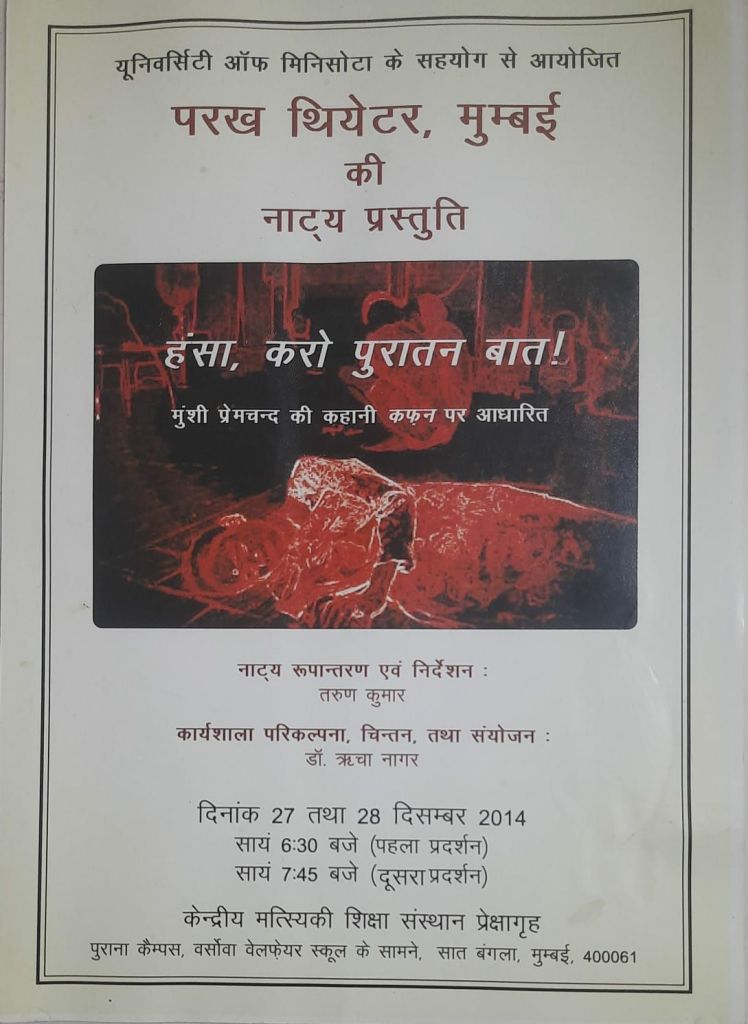
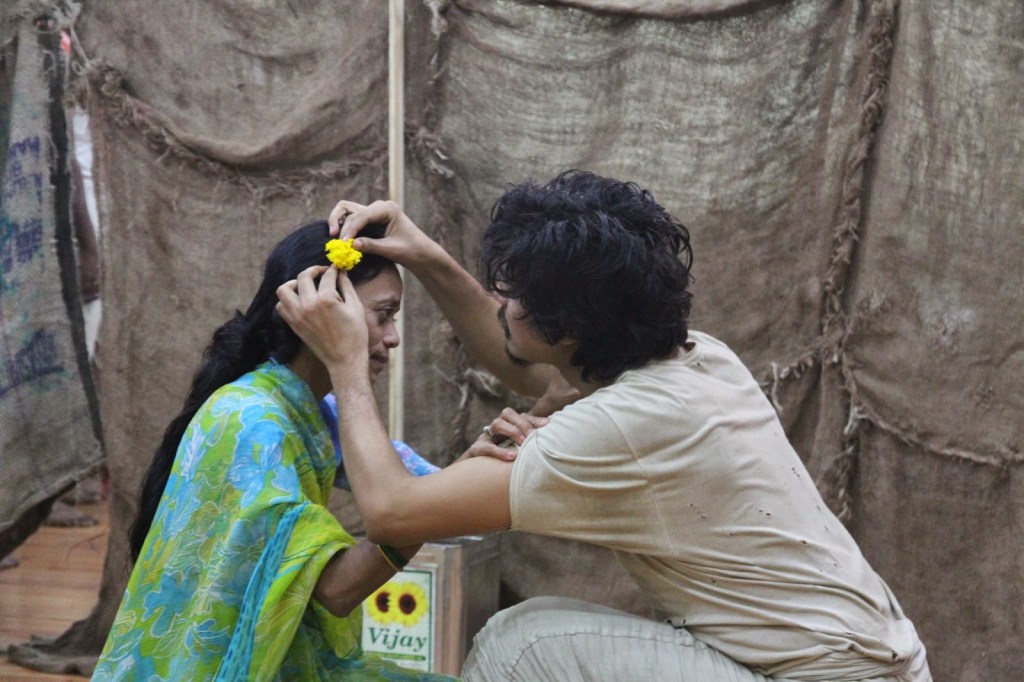
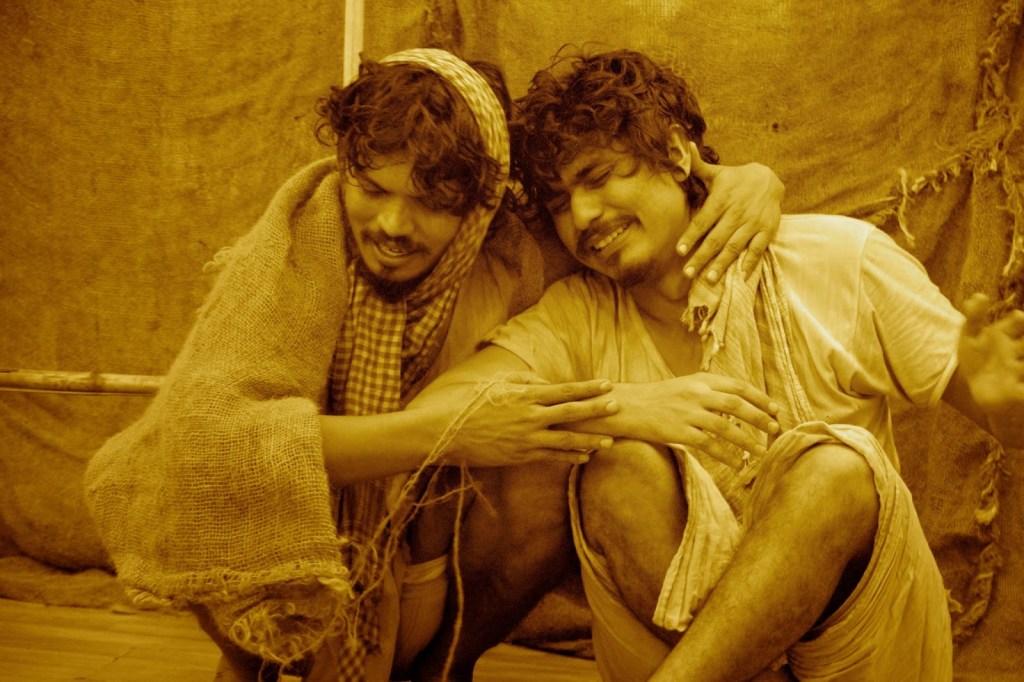
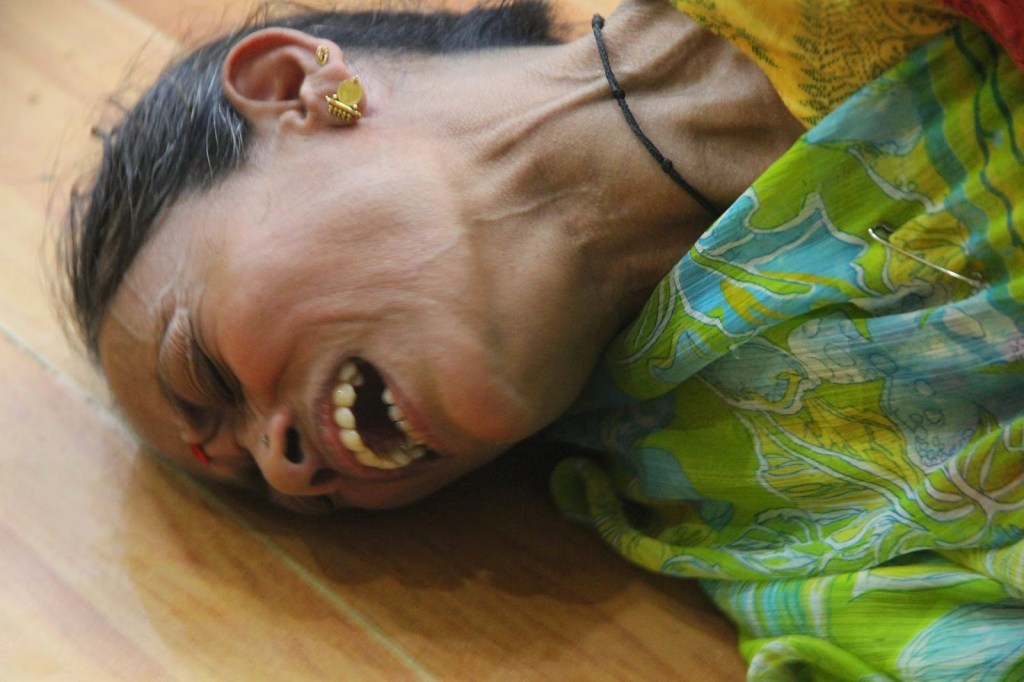
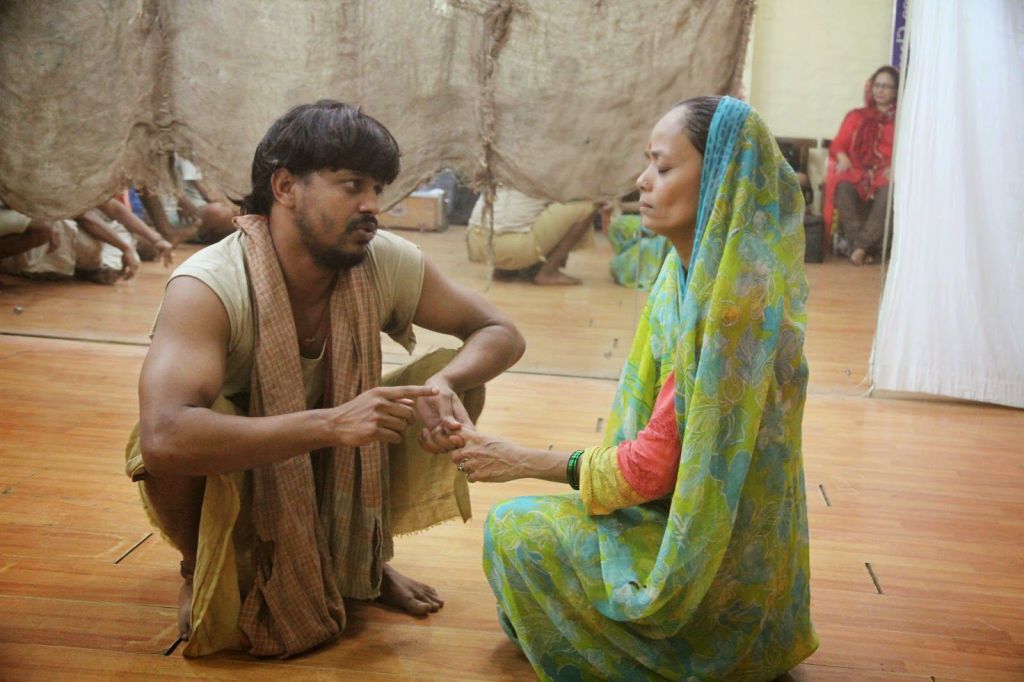
In 2014, Richa Nagar collaborated with Tarun Kumar, to organize through PARAKH, an intensive political theater workshop in the Yari Road neighborhood of Mumbai. The six-month long workshop brought together 20 people to grapple with issues of caste, class, gender, and religion through a focus on Hindi and Urdu fiction and culminated in Hansa, Karo Puratan Baat, based on a theatrical adaptation and collective reinterpretation of Premchand’s last short story, “Kafan” (The Shroud) and instilling it with the poetic and political sensibilities of Kabir’s work. The workshop participants were migrants to Mumbai from rural Uttar Pradesh, Madhya Pradesh, Haryana, Bihar, Jharkhand, Chhattisgarh, Karnataka and Gujarat, with half of them identifying as Savarna, and the other half identifying as Dalit, Dalit Muslim, OBC (other backward caste), or Adivasi. Although some were seeking careers in Mumbai’s film industry, others were providing domestic help in the homes of film and television artists. The participants worked through continuous embodied improvisations of the story based on their own experiences so that the play could embody Dalit critiques of the story, “Kafan.” For detailed discussion and analysis of the play and its making, see Part 3 of Hungry Translations: Relearning the World Through Radical Vulnerability.
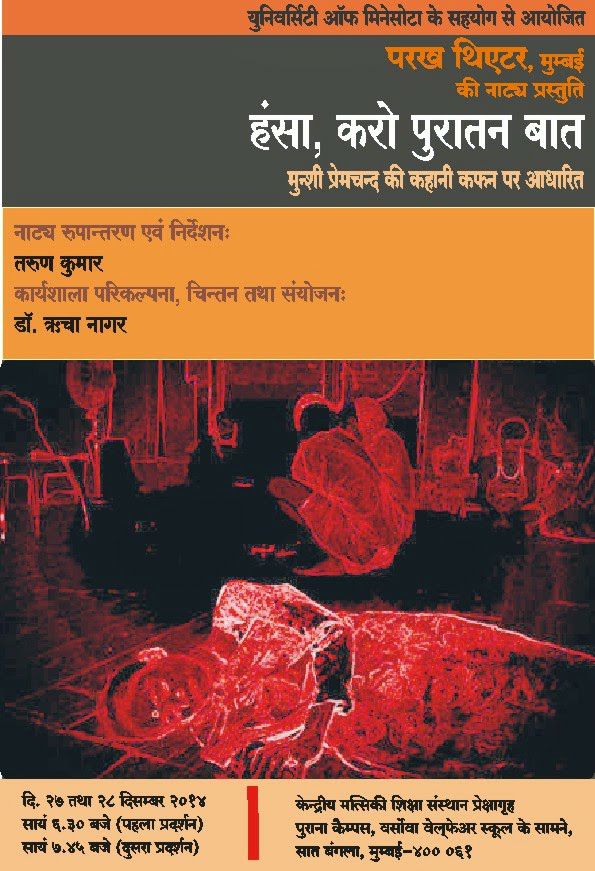
Hansa, Karo Puratan Baat, a play in Awadhi whose title is inspired by a song of Kabir, is based on Munshi Premchand’s last short story ‘Kafan’ (‘The Shroud’) which he first published in Urdu in 1935. The play, written and directed by Tarun Kumar, emerged from a six-month long theatre workshop in Mumbai, jointly organized by Richa Nagar and Tarun Kumar. The workshop brought together a group of 20 people to grapple with issues of caste, class, gender, and religion through a focus on Hindi/Urdu fiction. The workshop participants currently live in Mumbai but almost all of them grew up in rural areas of Uttar Pradesh, Madhya Pradesh, Harayana, Bihar, Jharkhand, Chhattisgarh, Karnataka, and Gujarat. While some of them aspire to become successful cinema actors, others work as domestic workers in the homes of film and television artists in the Yaari Road area of Mumbai and had never seen a play before participating in the workshop. In the last week of December 2014, the group performed four shows of Hansa before packed audiences, followed by long discussions between actors and audiences, at the D. V. Bal Auditorium in Versova, Mumbai.
The script was created with twenty workshop participants of Parakh-Mumbai in a six-month long workshop jointly coordinated and co-organized with Richa Nagar (July-December 2014) and supported by Centre for Fisheries Education, Mumbai and the University of Minnesota, Twin Cities, USA. The 20 participants (aged 16-53) came from both rural and urban areas from a range of socioeconomic backgrounds. Some were recent immigrants to Mumbai who have come to become professional actors in Bollywood while others were domestic workers providing help in the homes of Bollywood actors. I directed this five-month long performance oriented workshop in Mumbai, concluding with four successful shows of the play, Hansa, Karo Puratan Baat, based on Premchand’s story, Kafan. Staged in CIFE Auditorium, December 27th and 28th.
Reviews of Hansa Karo Puratan Baat
Transliteration of Munira Surati’s review
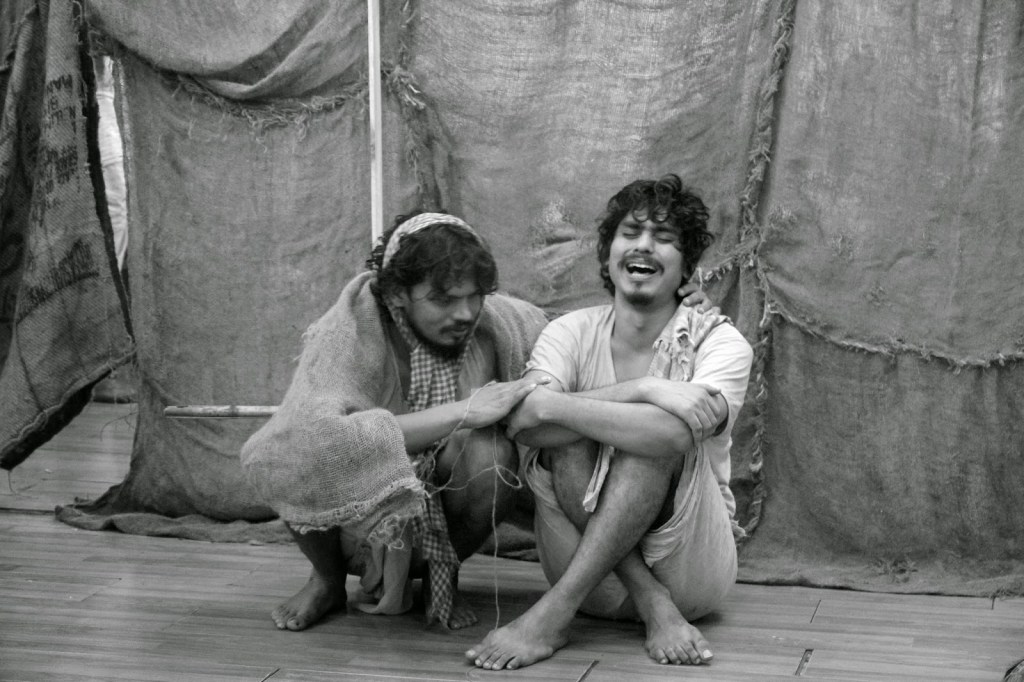
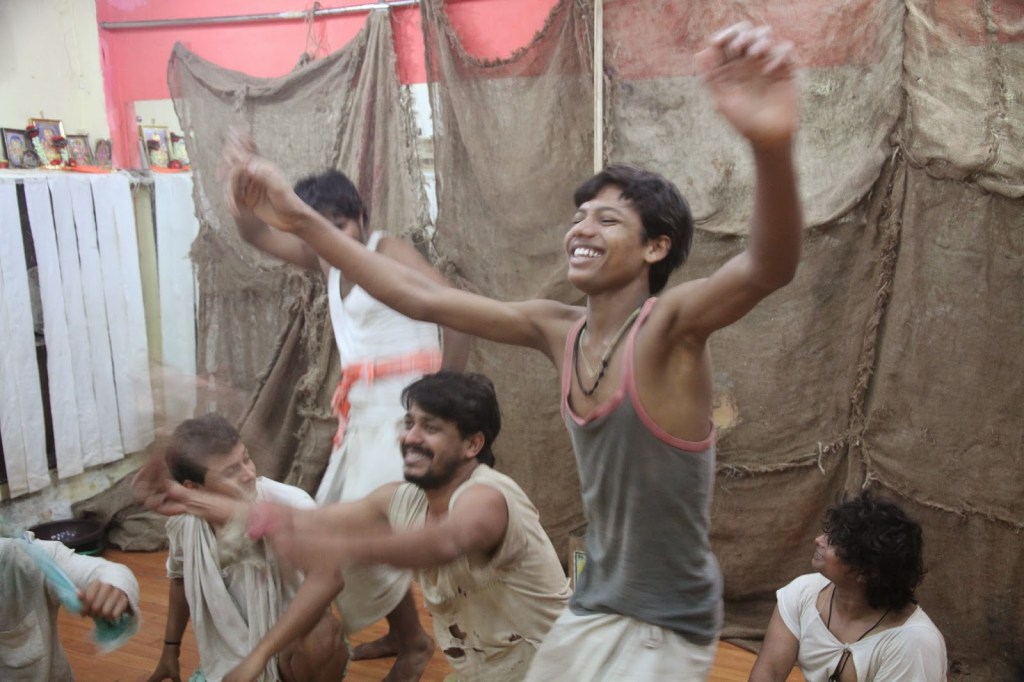
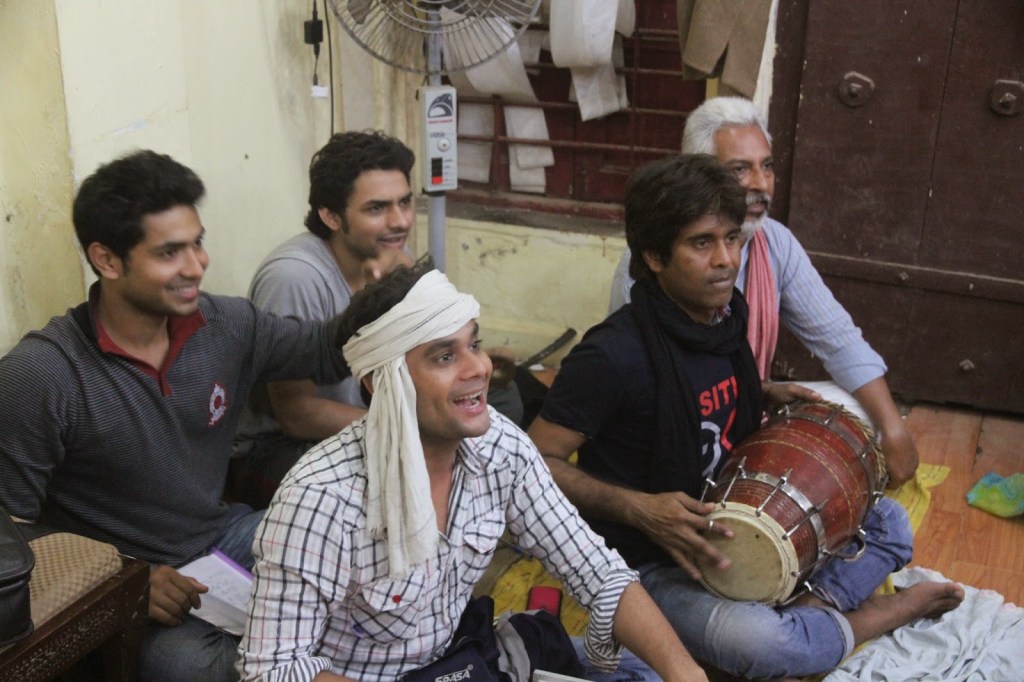
 PARAKH THEATRE GROUP